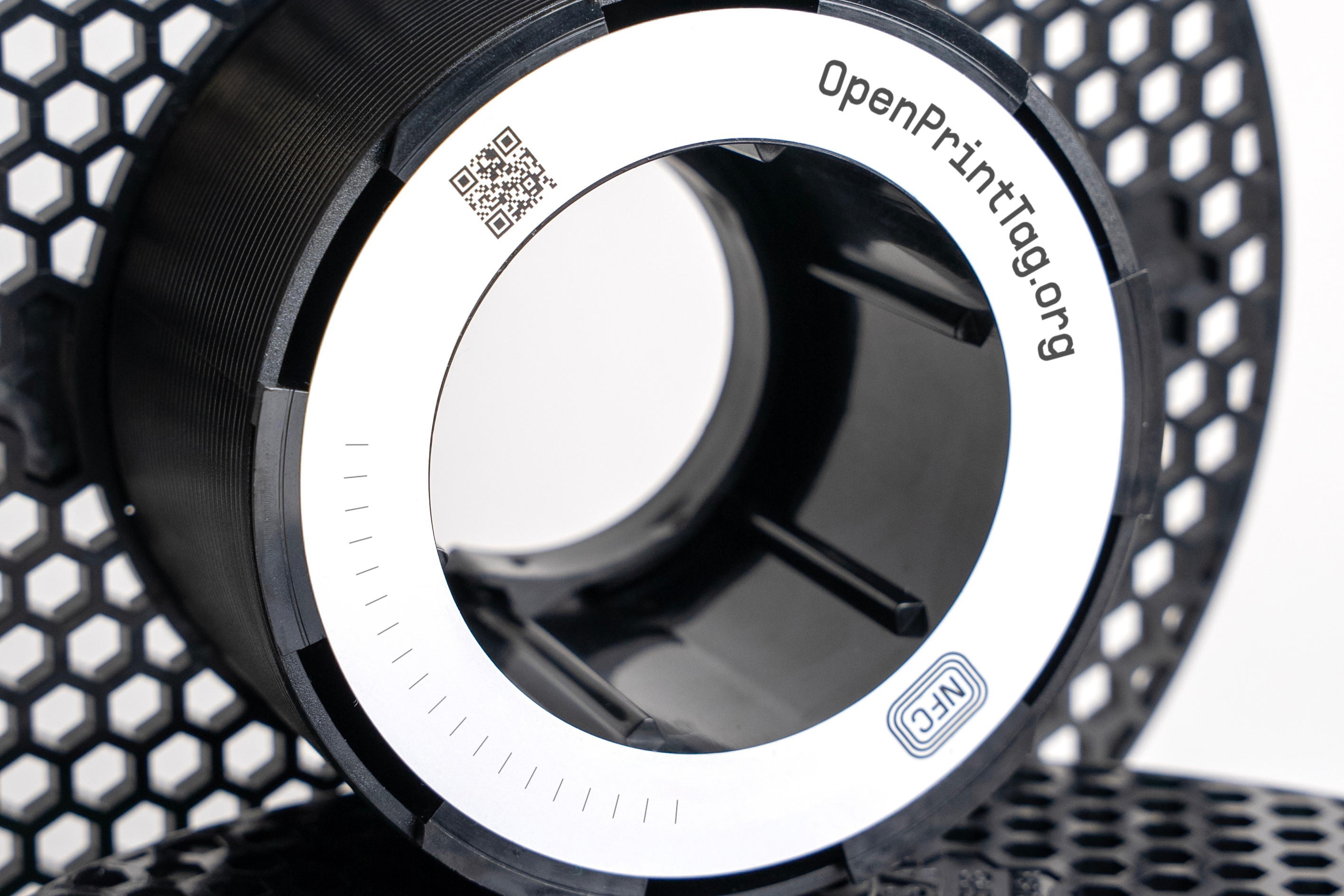
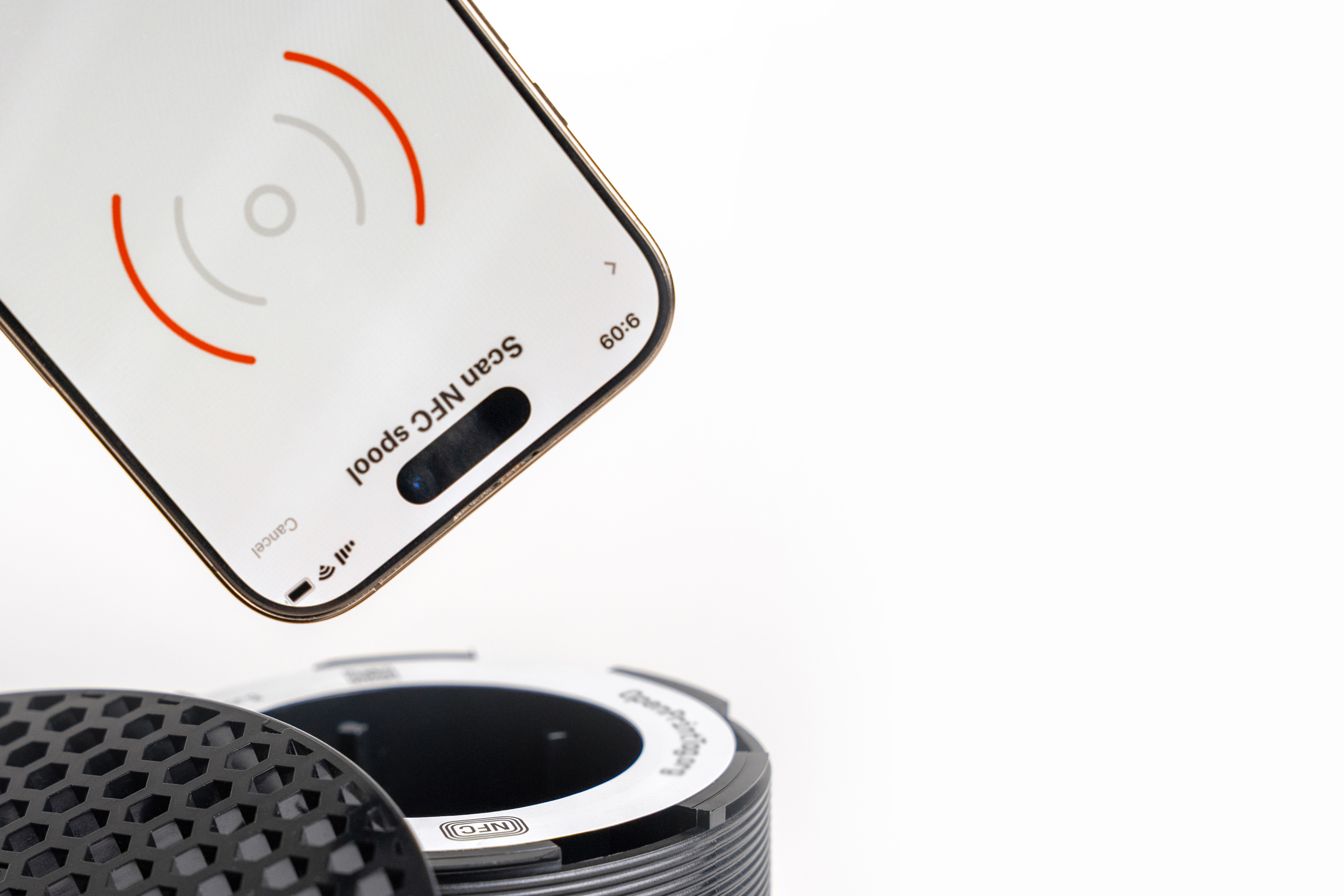
An open-source initiative by Prusa Research creating a single smart spool standard that works across all brands
and ecosystems. This allows printers and users to read and write data
directly on any spool, making 3D printing more reliable and intuitive
for everyone.
100%
Open Source
Universal
Compatibility
Future
Proof
Interested companies and groups
Why Do We Need Smart Spools?
3D printers have become incredibly user-friendly, but interaction with filament is still a very manual process. To improve the user experience and streamline the workflow, we need smart spools.
A smart spool carries all the important information about the material and its workflow, unlocking key features:
Material Recognition
Instantly identifies the material type and color, significantly reducing user error and leading to a simpler, more reliable workflow.
Live Data Tracking
Real-time data tracking, such as the amount of remaining filament, so you always know the exact status of your material.
Inventory Management
Enables effortless inventory management and full traceability by allowing you to log custom data.
The Few "Smart" Spools Today
Some smart spools already exist, but they lack the core principles of universality and interoperability. It's like every brand suddenly decided to use a different filament diameter.
🔒
Locked Proprietary Ecosystems
Smart spools are often locked to their specific hardware and filament. This makes them unusable with any third-party machines, forcing users into a closed ecosystem.
⚠️
Cloud Dependency
Many smart spools just refer to an online database, forcing you to rely on the manufacturer's cloud service. No internet? Your "smart" spool becomes dumb.
🗑️
Read-Only & One-Time-Use
Current Smart Spools offer little to zero reusability. This read-only design prevents any updates to live data, and once the filament is depleted, you have no choice but to throw the 'smart' spool away.
Fix — Crocdb
: Allows you to find specific retro game ROMs by title, platform, or slug without browsing through large file indexes.
: Tools like Jacare act as a desktop library manager, wrapping the CrocDB API for a more traditional software experience.
Crocdb streamlined this workflow through a specific technical philosophy: crocdb.net Reviews | check if the site is a scam or legit crocdb
Built for the murky depths of high-throughput systems where latency is the predator and downtime is the prey, CrocDB is the rugged, durable solution for developers who are tired of abstractions that leak.
Unlike traditional databases that primarily rely on disk I/O, CrocDB keeps the entire dataset in memory for reads and writes. However, it differentiates itself from pure caches (like Memcached) by offering configurable persistence mechanisms, making it a durable in-memory database . : Allows you to find specific retro game
was a centralized, open-source database and community-driven search index built to simplify access to retro gaming ROM links by unifying disparate, trusted internet repositories into a single searchable interface. Operable via its official domain crocdb.net , the platform operated strictly as a web aggregator and metadata provider. It explicitly chose not to host copyrighted binaries, games, or console firmware on its local servers. Instead, it relied on a robust Public API, native emulator integrations, and community contributions to build structured, highly queryable directories for digital preservation enthusiasts.
The WAL and snapshot files are stored in a specified directory. The WAL file is segmented (e.g., wal.0001 , wal.0002 ) to prevent unbounded growth. When a segment reaches a size threshold (e.g., 32 MB), CrocDB rotates it. An optional background goroutine compacts old WAL segments after a successful snapshot.