Thematically, "OpenH264" continues the show’s central thesis: there is no such thing as a pure artistic endeavor in the streaming age. By focusing on the codec—the literal vehicle by which the art is delivered—the show highlights the invisible wars fought over bandwidth.
The episode’s script cleverly uses the real-world open-source codec as a plot device for corporate espionage. When the studio attempts to switch to the open-source alternative to save money, they discover that "free" comes with a price. A rival conglomerate claims that the open-source implementation infringes on a vague, sweeping patent regarding "variable block-size motion compensation."
This is not gimmickry. It’s diegetic: the studio’s preview monitors are literally falling apart. But it also externalizes Maya’s anxiety. When she finally sits down to patch the codec herself—a 22-minute continuous shot of her typing, testing, swearing, and crying—the image slowly clarifies. By the time she runs the final test render, the frame is sharp again. She has restored not just the pipeline, but the looking glass . the studio s01e09 openh264
The episode centers on the studio’s attempt to launch a proprietary streaming platform (a subplot that has been simmering since the pilot). The technical team, led by the perennially exhausted CTO character, realizes they have hit a licensing wall. The proprietary codec they planned to use is going to cost the studio millions in royalties—money the finance department (led by a hilariously austerity-obsessed executive) refuses to release.
The episode opens in the cluttered server room of , a once-legendary 2D animation house now pivoting to streaming content. Our protagonist, lead render engineer Maya Chen (played with frayed brilliance by Fiona Lo), discovers that the studio’s entire pipeline for an upcoming feature— The Whale Who Typed —relies on an outdated, unpatched version of the OpenH264 video codec. Worse: the original developer who customized it for their needs has vanished. When the studio attempts to switch to the
The episode’s climax is not a shouting match but a quiet boardroom scene where Pax presents a spreadsheet showing that staying on OpenH264 will cost the studio $12,000 in opportunity cost. Maya counters with her own spreadsheet: the hours of artist time lost retraining, the frames that would glitch under the new codec’s motion estimation, the fact that the proprietary license expires in 18 months. “You’re optimizing for a quarterly report,” she says. “I’m optimizing for a legacy.”
— A landmark episode of television that proves you can build a thrilling, heartbreaking hour around a software library. Fiona Lo deserves every award for her performance. And if you’ve never thought about motion compensation as a love language, you will by the end. But it also externalizes Maya’s anxiety
The episode effectively satirizes the tech industry’s love affair with buzzwords. At one point, a studio executive keeps confusing "OpenH264" with a new television channel, promising advertisers "open access to the H264 demographic." It’s a biting commentary on how little the decision-makers actually understand the infrastructure that delivers their content.
git push origin main --force

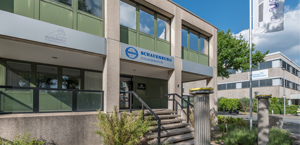
SCHAUENBURG Industrietechnik GmbH
Am Keuper 17
DE-90475 Nürnberg | Germany
Tel.: +49 9128 72 120 - 0
Fax: +49 9128 72 120 - 99
E-Mail:
www.schauenburg-industrietechnik.com ▸


Unsere Marken:
bpt Bayerische Profiltechnik®
VIGOT® Schlauchtechnik
Landingpages:
Feuerschutzschlauch ▸
MAXIMALL® Schlauchsysteme ▸
Kunststoffspritzguss ▸
Schlauchsysteme eKatalog ▸
Partnerschaften:
VIGOT® meets Braunwarth®
Überlingen, Deutschland
www.braunwarth-vigot.de ▸

Betriebsstätte Augsburg
Derchinger Str. 143
86165 Augsburg, Deutschland
Betriebsstätte Bremen
Ingolstädter Straße 7
28219 Bremen, Deutschland
Betriebsstätte Bochum
Wiescherstraße 86
44805 Bochum, Deutschland
Betriebsstätte Mülheim a.d. Ruhr
Lahnstraße 30
45478 Mülheim-Ruhr, Deutschland


Vertriebsbüro Baden-Württemberg
Adolf-Heim-Straße 11
74321 Bietigheim-Bissingen, Deutschland
Service Point Rhein-Main
Standort Hofheim am Taunus, Deutschland
www.mobile-schlauchpruefung.de ▸
Sleek Orchard © 2026






 Zu den Betriebsstätten ▸
 Starten Sie Ihre Karriere mit uns ▸