
Computing — Worderama
Easily Open Zip, 7zip, Rar, Winrar or Any Other File

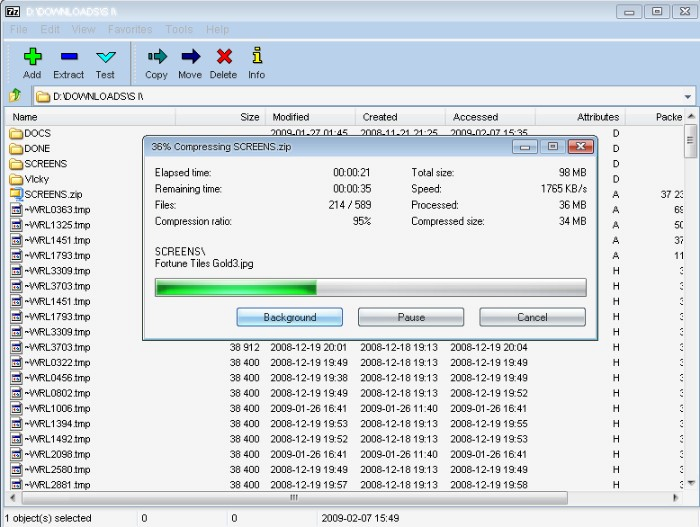
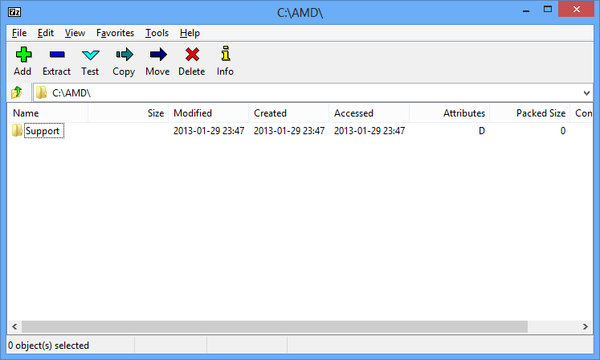

Unzipper is fully compatible with any format of document, image & more. Open or compress whatever files you need with no hassle.

Opening compressed files is as simple as double-clicking! Unzipper's self-extraction means less work & hassle for you.
Unzipper's functions are easy to understand. You'll be opening compressed files & creating file archives instantly.
Where tech meets vocabulary
The convergence of computing and word processing has given birth to a new era of computational linguistics. This field involves the use of computational techniques to analyze, understand, and generate human language. Computing Worderama is all about harnessing the power of computation to process, manipulate, and transform words, enabling us to perform a wide range of tasks, from simple text editing to complex natural language processing.
Computing Worderama: The Next Frontier of Linguistic Processing computing worderama
Here’s a versatile text for — adaptable for an event, contest, newsletter, or classroom activity.
The implications of Computing Worderama are felt across several industries: Where tech meets vocabulary The convergence of computing
Words matter — especially in the world of computing. Whether you’re a seasoned developer, a curious student, or just someone who’s ever wondered what “cloud storage” really means, Computing Word-erama is your playground.
At its core, Computing Worderama refers to the computational orchestration of vast "word-scapes." If traditional computing is about processing logic and numbers, Worderama is about processing the of language at a scale previously unimaginable. It is the digital equivalent of a "panorama" (hence the suffix "-rama") for words—a 360-degree view of how language functions across different cultures, technical domains, and social contexts. The Pillars of Worderama Technology At its core, Computing Worderama refers to the
Two words are anagrams if they contain the exact same letters. We can represent a word by its "signature"—the letters sorted alphabetically.
As we move toward more immersive computing environments, like Augmented Reality (AR) and the Metaverse, Computing Worderama will become the invisible layer that translates our physical world into understandable data. Imagine walking through a foreign city where the very air is filled with "Worderama" overlays—translating signs, explaining historical context, and even suggesting the best way to order a coffee in the local dialect. Conclusion
For small $n$ (e.g., 6 letters), this is computationally trivial for modern CPUs. However, as $n$ grows, the factorial complexity makes brute force inefficient.
downloads